
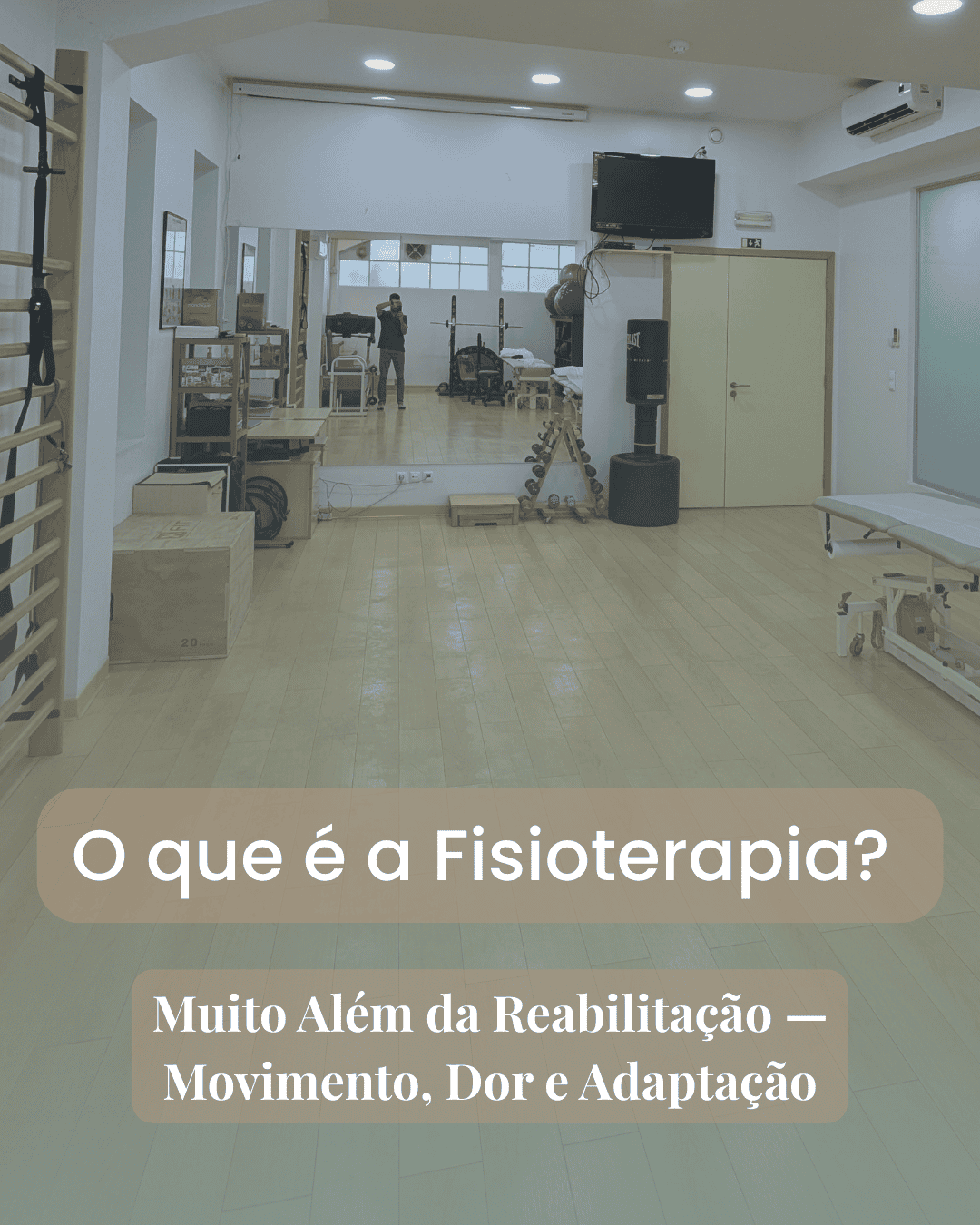
“What is physiotherapy?” It's a more common question in clinics than you might expect. So let's try to summarise this profession, which is as current as it is complex. Using the definition World Physiotherapy International as a base:
Physiotherapy is often associated with recovery from injury, surgery or an acute episode of pain. However, contemporary physiotherapy goes far beyond this limited vision. Rather than treating an injured structure, it focuses on understanding the mechanism of injury, analysing movement and the body's ability to adapt to the physical and contextual demands of everyday life.
In clinical practice, this implies:
-
understanding the mechanism of injury and movement behaviour;
-
interpret the severity, the period of evolution and estimate recovery based on the available scientific evidence;
-
modulate pain and restore function through technology, manual therapy and clinical exercise;
-
consider the emotional needs and individual context of each person.
It's not just about recovering what has been lost, but restoring function and increasing the resilience of the system as a whole.
What is physiotherapy anyway?
In clinical practice, physiotherapy begins with a detailed assessment that seeks to understand not only where it hurts, but how the person moves, how they react to the load, what compensation strategies they have developed and what beliefs they hold about their pain.
The educational role is fundamental. Explaining what is happening, clarifying the meaning of complementary tests and contextualising pain within an adaptive process are essential steps to reduce fear and increase confidence. Understanding directly influences the way the nervous system interprets stimuli and, consequently, the experience of pain.
Physiotherapy in Acute Injury: Intervene Critically
In the context of acute injury - such as sprains, fractures or ligament ruptures - physiotherapy works to manage pain, protect the structure involved and maintain mobility within safe limits.
However, even at this early stage, the goal is not just tissue healing, but the preservation of overall function. Excessive immobilisation or prolonged rest can compromise recovery, leading to stiffness, loss of strength and changes in motor pattern.
Appropriate load progression, even in the early stages, stimulates regeneration and keeps the system active. This progression is always organised on the basis of available scientific evidence and clinical experience, respecting biological timescales and individual response.
Sports Rehabilitation: From Return to Optimisation
In the context of sport, physiotherapy plays a central role. A return to sport doesn't just depend on the absence of pain or the structural consolidation of the injury. It requires sufficient strength, adequate neuromuscular control, the ability to absorb impact, sport-specific endurance and, above all, the athlete's confidence.
The transition between rehabilitation and optimisation is a continuum, with no rigid dividing line. A hasty return increases the risk of relapse and perpetuates cycles of injury.
Physiotherapy accompanies this process progressively, monitoring the response to the load and working in conjunction with coaches and other professionals involved.
And Outside of Sport? Movement for Daily Life
Limiting physiotherapy to sport would be reductive. Most people seek counselling in order to resume simple activities: walking without pain, working without limitations or exercising safely.
In these cases, physiotherapy acts as a movement facilitator, helping to rebuild efficient motor patterns and increase progressive tolerance to activity. Manual therapy, rehabilitation technology and therapeutic exercise are central tools in this process.
The selection of exercises, dose, frequency and progression depend on the stage of recovery, the level of sensitisation of the nervous system and the person's current ability.
Physiotherapy in Chronic Pain: Regulating and Reorganising
Intervention in persistent pain deserves special mention. In chronic pain, It is common to have a long history of therapeutic attempts, inconclusive tests or alarmist interpretations of structural alterations that are common in the general population.
Physiotherapy plays a strategic role in reorganising movement and reinterpreting it. pain as a multifactorial phenomenon. The gradual progression of the load, combined with education and controlled exposure to movement, reduces hypervigilance and restores confidence.
The process requires consistency, but is often decisive in breaking cycles of functional limitation.
Physiotherapy and Osteopathy: A Complementary Approach
In cases of persistent pain, the professional's first objective should be to reassure and help the person to reinterpret their pain.
In this context, osteopathy can act as a strategic crossroads, facilitating mobility, reducing tension and influencing the perception of pain through its global approach to physical systems and the modulation of the nervous and musculoskeletal systems.
At OsteoSalvador, based in Lisbon, physiotherapy does not work in isolation. The articulation with osteopathy, the careful use of manual therapy and the integration of structured exercise allow for a more comprehensive approach.
While manual intervention can facilitate mobility in the early stages, the year consolidates gains and promotes adaptation in the medium and long term. This complementarity is strategic: each tool has its moment within the recovery plan.
When to seek physiotherapy?
Physiotherapy can be indicated in many situations: recurring lumbar or cervical pain, sports injuries, post-surgical recovery, sprains, fractures or headaches associated with muscle tension.
More than the specific condition, what justifies intervention is the presence of functional limitations, persistent pain or difficulty in resuming normal activities. Early assessment makes it possible to structure recovery and prevent initial changes from evolving into more complex conditions.
An Active and Participatory Process
Physiotherapy should be understood as an active process. Recovery doesn't just happen in the session, but above all in the way the person moves, progressively exposes themselves to the load and interprets their body's signals.
The physiotherapist's role is to guide, adjust and create the conditions for this adaptation to take place safely and sustainably. It's not just about treating an injury, but promoting adaptability, autonomy and confidence in movement.
Article written by Ricardo Salvador
Osteopath and Physiotherapist | Specialist in Chronic Pain and Sports Rehabilitation
Ricardo Salvador is dedicated to an integrated approach to musculoskeletal pain, combining physiotherapy, osteopathy and therapeutic exercise to promote functional recovery and progressive adaptation to movement.
At OsteoSalvador, he works as part of a team, ensuring clinical coherence between assessment, manual intervention and structured rehabilitation.
More





Book Your Appointment
Ready to get started on your journey to recovery is he a Savior?
Please contact us at: